Protocolos del silencio investiga el instante previo a la enunciación: el momento en que una idea es corregida, filtrada o detenida antes de convertirse en lenguaje. El proyecto parte de frases aprendidas en contextos familiares, religiosos y educativos, y observa cómo una forma externa de control puede incorporarse hasta operar como autocensura.
Las obras utilizan bordado blanco sobre blanco, gofrado ciego, dibujo intervenido, objetos y dispositivos sonoros para trabajar con lenguajes que permanecen presentes aunque apenas puedan verse o escucharse. En Vía de la culpa, catorce lienzos bordados recuperan frases transmitidas como corrección, consuelo o disciplina. Su baja visibilidad exige acercarse y reproduce físicamente el esfuerzo de reconocer aquello que ha sido interiorizado.
Aquí, el silencio no aparece como ausencia de palabras, sino como su consecuencia. Las frases continúan actuando después de haber perdido una voz identificable: organizan el comportamiento, regulan lo que puede decirse y participan en la construcción de culpa, obediencia y adaptación. El proyecto convierte esos mecanismos en superficies, ritmos y demoras que permiten observar cómo una prohibición aprendida puede llegar a confundirse con una decisión propia.
El proyecto también encuentra un antecedente en mis primeras intervenciones con esténcil en el espacio público. Influido por la cultura punk, encontré en el anonimato una forma de decir aquello que no podía expresar en casa ni en el colegio. Frente a la advertencia repetida —“cuidado con lo que decís, no sabés quién está oyendo”—, las paredes y la calle se convirtieron en superficies donde esa vigilancia perdía temporalmente su poder. Si el esténcil fue inicialmente una manera de escapar del silencio, Protocolos del silencio examina posteriormente cómo ese silencio llega a interiorizarse y a operar incluso en ausencia de una autoridad visible.
Protocolos del silencio
Protocols of Silence investigates the moment before expression: when an idea is corrected, filtered, or stopped before it becomes language. The project begins with phrases learned within family, religious, and educational environments, examining how an external form of control can be internalized until it operates as self-censorship.
The works use white-on-white embroidery, blind embossing, altered drawings, objects, and sound devices to engage with forms of language that remain present even when they are barely visible or audible. In The Way of Guilt, fourteen embroidered canvases recover phrases transmitted as correction, consolation, or discipline. Their low visibility requires the viewer to move closer, physically recreating the effort involved in recognizing what has already been internalized.
Here, silence does not appear as the absence of words, but as their consequence. The phrases continue to act after the voice that pronounced them can no longer be identified: they organize behavior, regulate what can be said, and participate in the construction of guilt, obedience, and adaptation. The project gives these mechanisms material form through surfaces, repetitions, delays, and interrupted acts of communication.
The project also finds an early precedent in my first stencil interventions in public space. Influenced by punk culture, I found in anonymity a way to express what I could not say at home or at school. Against the repeated warning—“be careful what you say; you never know who might be listening”—walls and streets became surfaces where that surveillance temporarily lost its power. While stencil initially offered a way to escape silence, Protocols of Silence later examines how that silence becomes internalized and continues to operate even in the absence of visible authority.
Protocols of silence
Vía de la culpa reúne catorce lienzos bordados en blanco sobre blanco, organizados a partir de la estructura del viacrucis. Cada estación recupera una frase aprendida durante mi educación religiosa: expresiones transmitidas como corrección, orientación o cuidado que, mediante la repetición, llegaron a operar como culpa y autocensura.
El bordado fija las palabras sobre la superficie, del mismo modo en que la repetición puede inscribirlas en la memoria y la conducta. Su baja visibilidad obliga al espectador a acercarse y ajustar la mirada. Las frases permanecen presentes, aunque su procedencia se haya vuelto difusa y ya no sea posible distinguir con claridad entre la voz que las impuso y la voz propia.
ENG.
The Way of Guilt brings together fourteen white-on-white embroidered canvases structured around the Stations of the Cross. Each station recovers a phrase learned during my religious education: expressions presented as correction, guidance, or care that, through repetition, came to operate as guilt and self-censorship.
The embroidery fixes the words onto the surface in the same way repetition can inscribe them into memory and behavior. Their low visibility requires the viewer to move closer and adjust their gaze. The phrases remain present even when their source has become blurred and it is no longer possible to distinguish clearly between the voice that imposed them and one’s own.
Vía de la culpa
Inscripciones tempranas
Inscripciones tempranas parte de frases de corrección, culpa y obediencia recopiladas mediante conversaciones sobre la infancia. Las coincidencias entre distintas memorias revelan un repertorio compartido: un lenguaje mediante el cual la autoridad comenzó a incorporarse antes de que pudiera ser reconocida o cuestionada.
Las frases son procesadas como secuencias MIDI y trasladadas a ocho tiras perforadas. En esa transformación pierden sus palabras, sus voces y buena parte de sus diferencias, hasta convertirse en composiciones mínimas y repetitivas, cercanas al ritmo de una marcha.
Las tiras funcionan simultáneamente como partituras, archivos y matrices. Como en un grabado inverso, la inscripción ocurre mediante la ausencia: cada perforación retira materia y, al mismo tiempo, activa el mecanismo. Aunque las palabras dejan de ser reconocibles, permanecen inscritas como patrones capaces de producir ritmo y repetición.
El público puede elegir una tira, introducirla en una de las dos cajas de música y girar la manivela. Con ese gesto reactiva un mandato que ya no puede escucharse literalmente. La voz desaparece, pero persiste la estructura mediante la cual una orden puede convertirse en hábito y continuar organizando la conducta.
ENG.
Early Inscriptions begins with phrases of correction, guilt, and obedience gathered through conversations about childhood. Recurring expressions across different memories reveal a shared repertoire: a language through which authority began to take hold before it could be recognized or questioned.
The phrases are processed as MIDI sequences and transferred onto eight perforated strips. Through this transformation, they lose their words, voices, and much of their individual character, becoming minimal, repetitive compositions that resemble the rhythm of a march.
The strips function simultaneously as scores, archives, and matrices. As in a form of reverse printmaking, inscription occurs through absence: each perforation removes material while activating the mechanism. Although the words are no longer recognizable, they remain inscribed as patterns capable of producing rhythm and repetition.
Visitors may select a strip, insert it into one of the two music boxes, and turn the handle. Through this gesture, they reactivate a command that can no longer be heard literally. The voice disappears, but the structure through which an instruction becomes habit—and continues to organize behavior—remains.
Documentos de una ausencia producida
Archivo en curso, 2003–presente
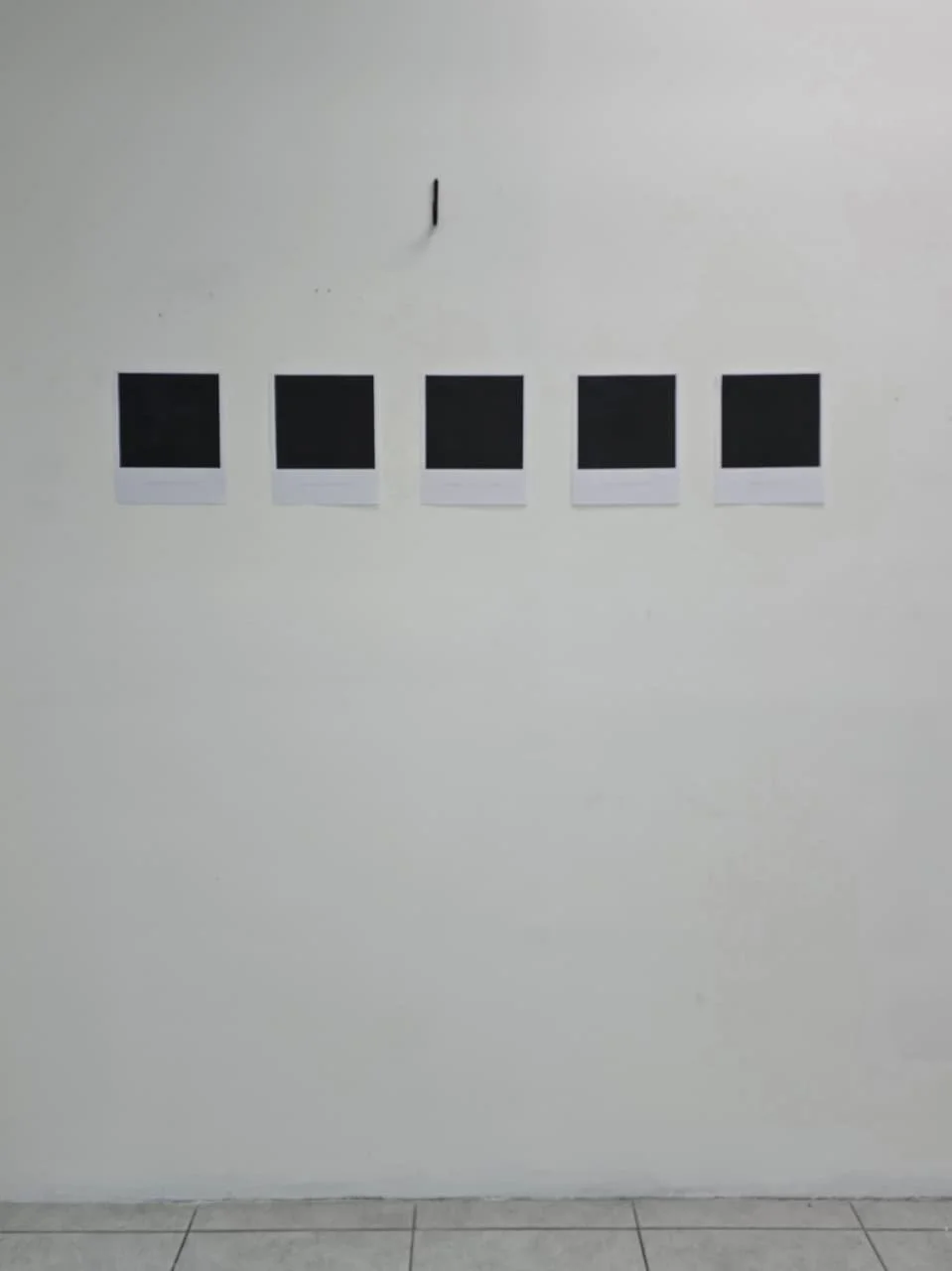
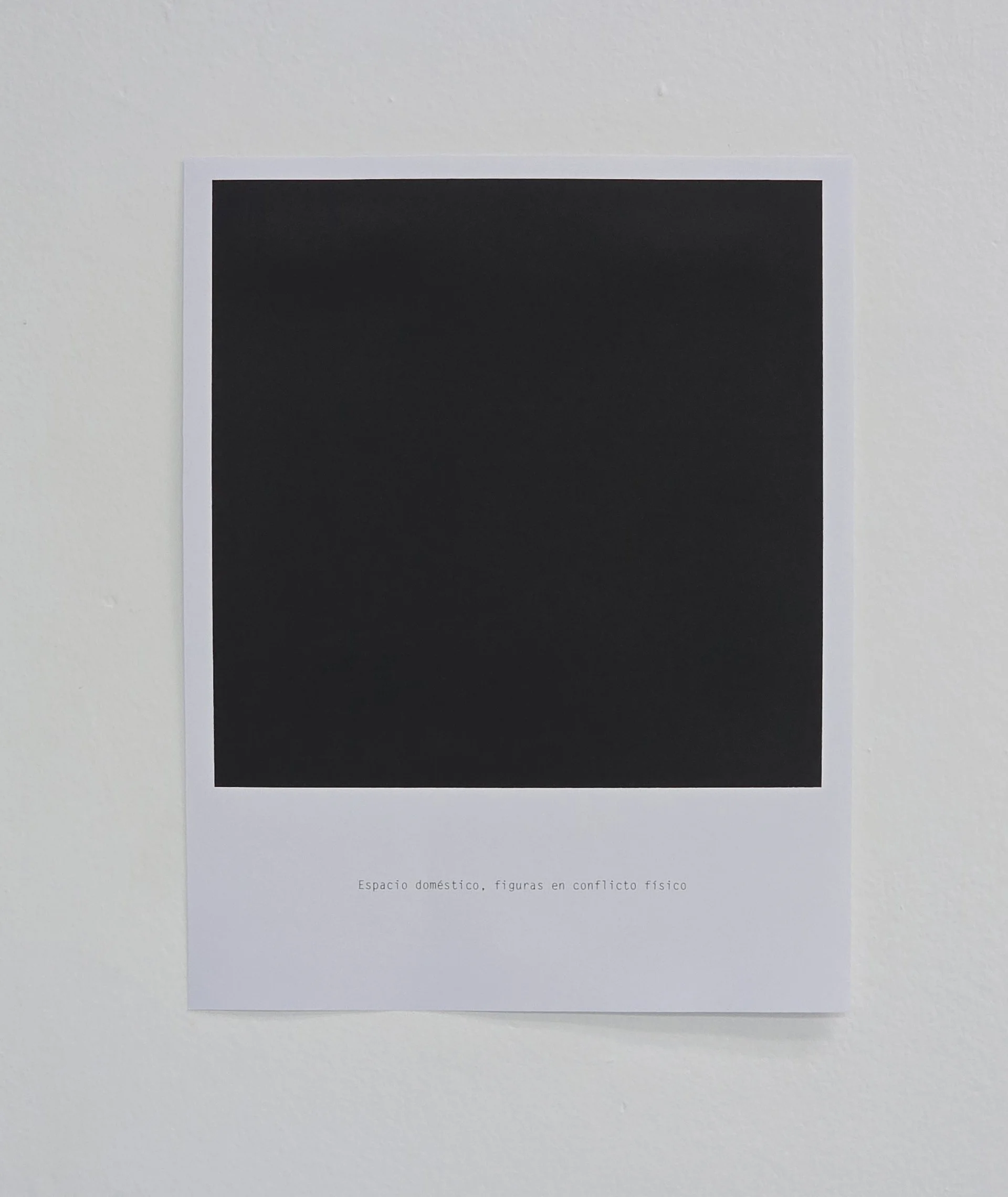
Documentos de una ausencia producida se origina en registros reunidos desde 2003 en contextos de práctica clínica, trabajo voluntario y observación de campo. A lo largo de estos años documenté cerca de novecientos dibujos que posteriormente fueron descartados, confiscados, destruidos, borrados o perdidos. El archivo no conserva nombres, diagnósticos ni información que permita identificar a quienes realizaron las imágenes.
Los dibujos ya no existen. En su lugar, cada ficha presenta un bloque negro acompañado por una descripción redactada en un lenguaje técnico y burocrático, adaptado de sistemas institucionales utilizados para registrar y clasificar imágenes.
El bloque negro no cubre una obra que permanece oculta detrás de él. Ocupa el lugar de algo cuya desaparición ya ocurrió. La censura no aparece como un gesto en proceso, sino como una ausencia deliberadamente producida y transformada en documento.
Al sustituir cada imagen por una descripción administrativa, el archivo somete lo sucedido a la lógica del documento burocrático. Aquello que fue destruido, confiscado o borrado queda reducido a una ficha aparentemente neutral, como si pudiera ser clasificado, contenido y vuelto trivial. Sin embargo, el registro no consigue eliminar el acontecimiento: el bloque negro y el lenguaje que lo rodea se convierten en evidencia de que una imagen existió y de que su desaparición fue provocada.
El proyecto no intenta reconstruir los dibujos originales. Conserva la marca de su eliminación y señala el fracaso de todo intento de borrado absoluto. Incluso bajo la censura y la aparente neutralidad del lenguaje administrativo, permanece el rastro de algo que ocurrió y que ya no puede deshacerse.
ENG.
Documents of a Produced Absence
Ongoing archive, 2003–present
Documents of a Produced Absence originates in records gathered since 2003 through clinical practice, volunteer work, and field observation. Over the years, I documented nearly nine hundred drawings that were later discarded, confiscated, destroyed, erased, or lost. The archive contains no names, diagnoses, or information that could identify the people who made the images.
The drawings no longer exist. In their place, each record presents a black field accompanied by a description written in technical, bureaucratic language adapted from institutional systems used to register and classify images.
The black field does not cover an artwork that remains concealed behind it. It occupies the place of something whose disappearance has already occurred. Censorship appears not as an act in progress, but as a deliberately produced absence transformed into a document.
By replacing each image with an administrative description, the archive subjects what occurred to the logic of bureaucratic documentation. What was destroyed, confiscated, or erased is reduced to an apparently neutral record, as though it could be classified, contained, and rendered insignificant. Yet the record cannot eliminate the event: the black field and the language surrounding it become evidence that an image existed and that its disappearance was produced.
The project does not attempt to reconstruct the original drawings. It preserves the mark of their removal and points to the failure of any attempt at absolute erasure. Even under censorship and the apparent neutrality of administrative language, a trace remains of something that occurred and cannot be undone.
Lienzo en blanco.
2003
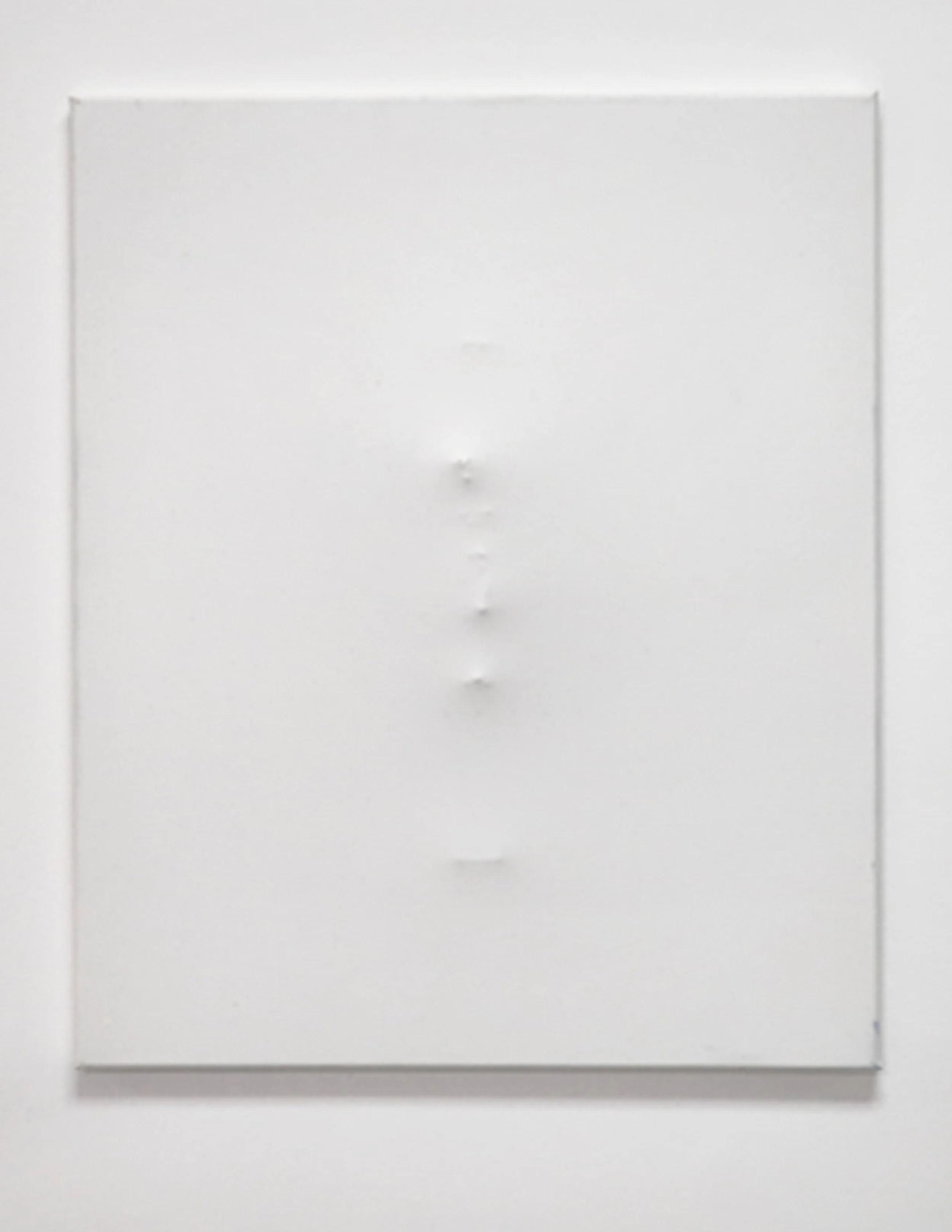
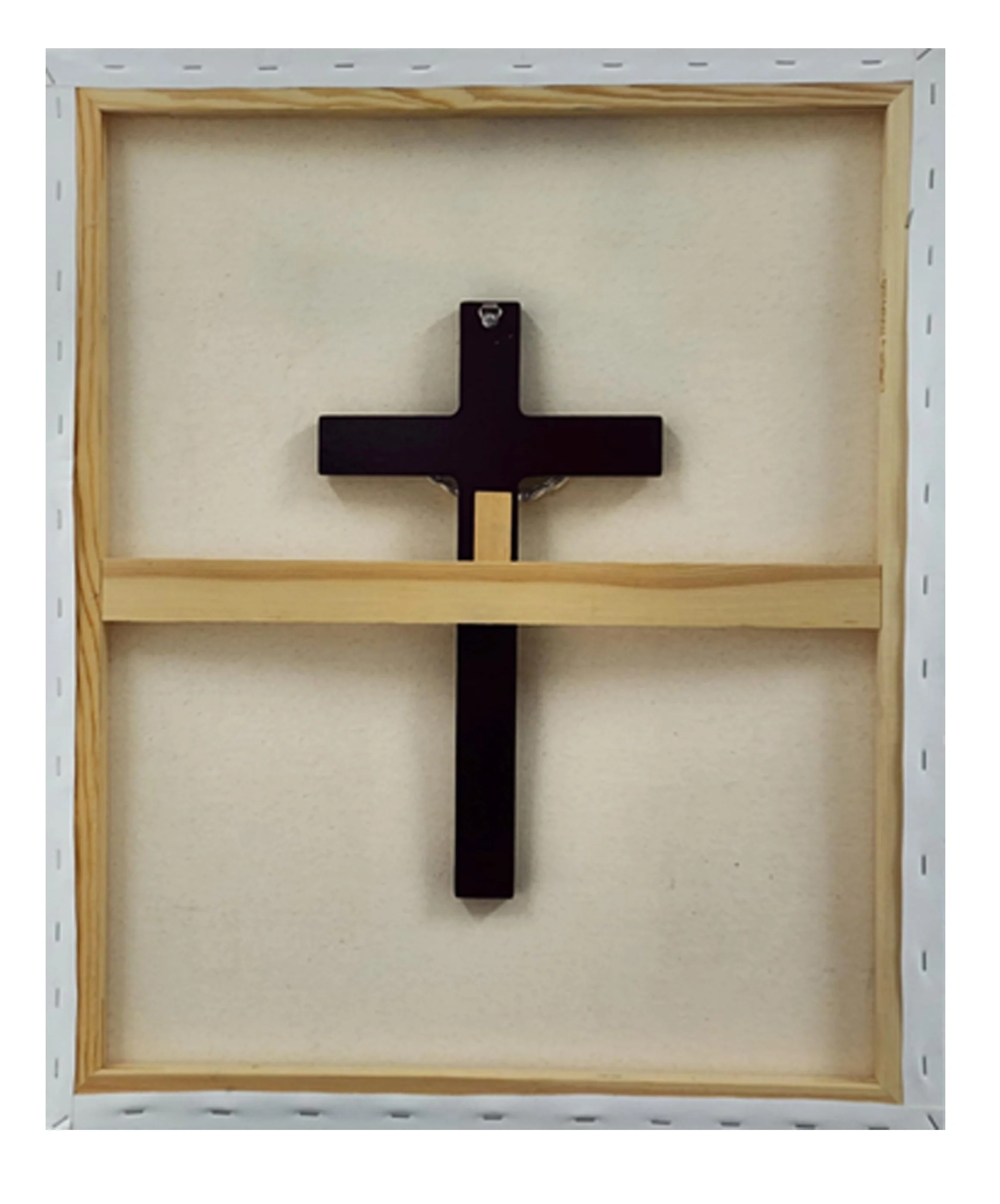
Dentro de Protocolos del silencio, Lienzo en blanco cuestiona la idea de que sea posible comenzar desde una superficie verdaderamente neutral. Antes de recibir una imagen, el lienzo ya ha sido atravesado por sistemas de creencia, formas de autoridad y experiencias heredadas que intervienen en aquello que puede llegar a expresarse.
Un crucifijo oculto en el reverso presiona la tela sin presentarse frontalmente como imagen. Solo permanecen visibles las alteraciones que produce. La obra desplaza así el símbolo religioso del campo de la representación hacia el de la formación: aquello que no se ve continúa determinando la forma.
El silencio no aparece aquí como ausencia, sino como una condición previa. La superficie está en blanco, pero no intacta; conserva la marca de aquello que la ha formado, sostenido o limitado. La pieza sitúa esa presión antes de la palabra y antes de la imagen, y plantea que todo intento de comenzar nuevamente lleva consigo las huellas de lo aprendido, incluso cuando su origen ya no resulta visible.
ENG.
BLANK CANVAS
Within Protocols of Silence, Blank Canvas questions whether it is possible to begin from a truly neutral surface. Before receiving an image, the canvas has already been shaped by inherited systems of belief, forms of authority, and experiences that intervene in what may eventually be expressed.
A crucifix concealed on the reverse presses against the fabric without appearing frontally as an image. Only the alterations it produces remain visible. The work thus shifts the religious symbol from the field of representation to that of formation: what cannot be seen continues to determine form.
Silence appears here not as absence, but as a prior condition. The surface is blank, yet not untouched; it retains the imprint of what has shaped, sustained, or constrained it. The work places this pressure before language and before the image, suggesting that every attempt to begin again carries traces of what has been learned, even when its source is no longer visible.